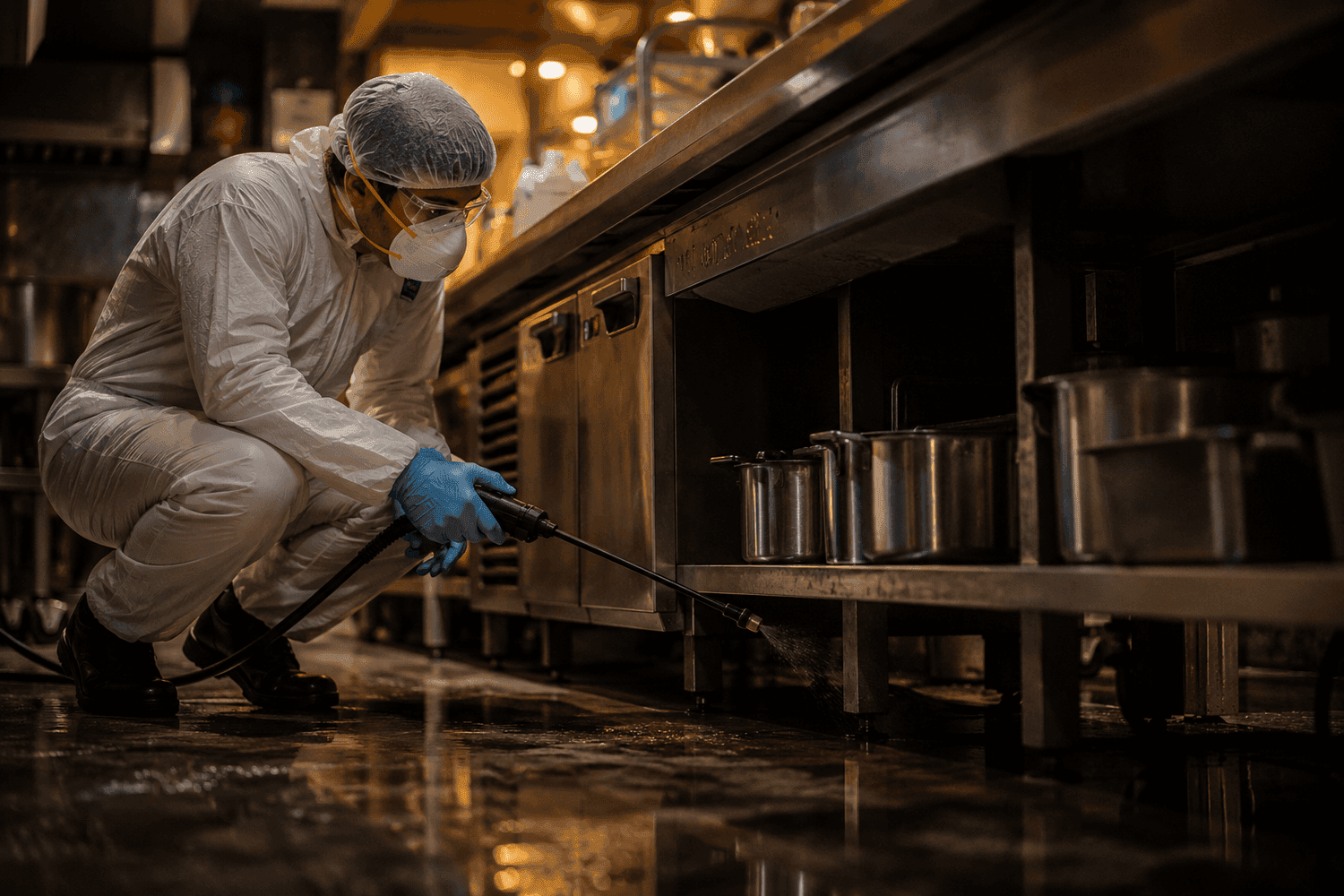
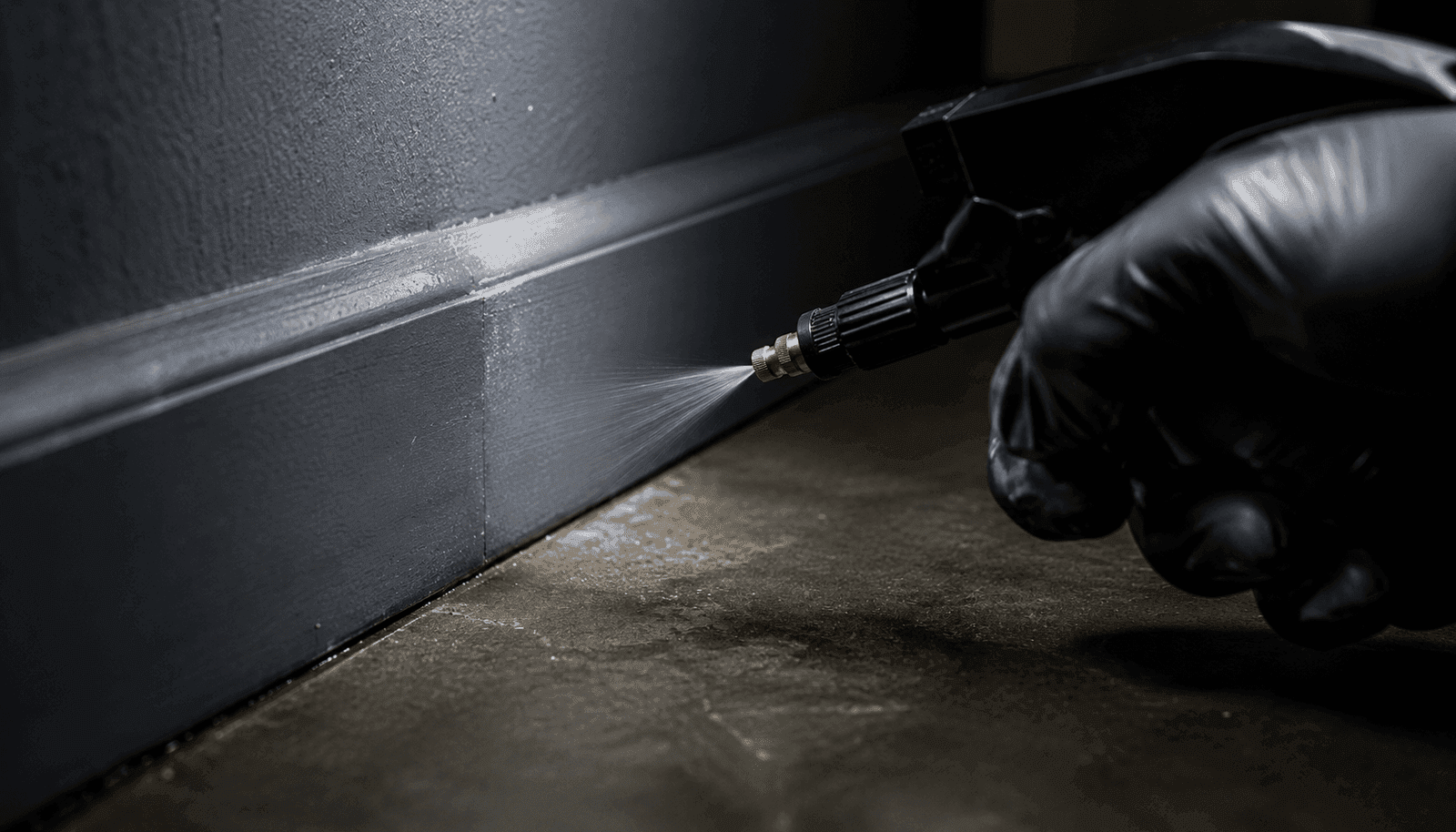
If you run a restaurant, cafe, cloud kitchen or catering unit in Maharashtra, food safety and kitchen hygiene should be a priority—not just when an inspection is expected.
In 2026, inspections by the Maharashtra Food and Drug Administration (FDA), under Commissioner Tukaram Mundhe, have put restaurant hygiene and food safety in the spotlight. Food businesses can face regulatory action when inspections identify serious hygiene or compliance issues. Cockroaches, rodents, poor sanitation and inadequate pest prevention can create risks for both customers and restaurant operators.
There is another challenge for restaurant owners: customers can photograph or record unhygienic conditions and share them online within minutes. A pest sighting can quickly become a public complaint, damaging customer confidence and your restaurant's reputation.
Effective restaurant pest control in Mumbai is about more than removing visible cockroaches. It means preventing infestations, maintaining hygienic conditions and keeping appropriate records of the pest-management work carried out at your premises.
Here is a practical guide to help you identify common risks and prepare your kitchen.
Why Restaurant Kitchens Attract Cockroaches
Commercial kitchens provide food, water, warmth and hiding places—exactly the conditions that can support cockroach activity. Even a kitchen that looks clean during service may have pest activity in areas that are rarely inspected.
1. Heat and Moisture
Tandoors, dishwashing areas, refrigerators and food-preparation equipment can create warm environments. Leaking pipes, damp corners and standing water provide additional moisture that may attract pests.
Regularly inspect plumbing, clean hard-to-reach areas and address leaks promptly.
2. Deliveries and Packaging
Vegetable crates, cardboard cartons, sacks and other delivery materials can introduce cockroaches or egg cases into your storeroom.
Inspect incoming deliveries, keep stock organized and remove unnecessary packaging promptly. Store food in suitable containers and avoid allowing cartons to accumulate near preparation areas.
3. Cockroaches Become More Noticeable at Night
Cockroaches often hide during busy service hours and emerge when the kitchen becomes quiet. Seeing one or two during the day does not necessarily indicate the size of an infestation.
Inspect behind equipment, under sinks, around drains and inside accessible storage areas after closing. Record sightings so recurring activity can be investigated.
4. Shared Walls, Drains and Service Ducts
In Mumbai's commercial buildings, pests may move through drainage systems, utility openings, wall gaps and service ducts. Treating one kitchen may not solve the problem if entry points and surrounding conditions remain unchanged.
A good pest-management plan should address the affected areas and identify practical measures to reduce re-entry.
5. Inappropriate Spraying
General-purpose sprays may not reach the places where cockroaches hide. Incorrect use can also create exposure risks or contaminate food and food-contact surfaces.
Professional restaurant pest control in Mumbai should use methods appropriate to the infestation, the kitchen environment and the product's directions.
The 10-Point Restaurant Kitchen Pest Control Checklist
Use this checklist during routine kitchen inspections, ideally including a check after closing.
1. Inspect Behind and Under Equipment
Check around fryers, refrigerators, dishwashers, tandoor bases and other difficult-to-clean areas. Look for droppings, egg cases, dead insects and live cockroaches.
2. Check Equipment Housings and Service Areas
Inspect accessible areas around motors, equipment housings and utility openings. Electrical panels should only be opened by qualified personnel when necessary.
3. Examine Drains and Floor Traps
Check whether drain covers are intact. Look for standing water, grease deposits, blocked drains and gaps around pipes. Arrange cleaning and repairs where required.
4. Review Storeroom Conditions
Keep dry stock organized, off the floor and away from walls where practical. Inspect sacks, cartons and food containers for damage or signs of pest activity.
5. Inspect the Receiving Area
Check deliveries when they arrive. Remove unnecessary cartons and packaging promptly, and avoid transferring potentially infested materials into food-storage areas without inspection.
6. Check Windows, Exhausts and Doors
Look for gaps, damaged screens and openings that may allow cockroaches, flies or rodents to enter. Suitable door seals and screens can help reduce pest access.
7. Look for Signs of Rodents
Inspect for droppings, gnaw marks, damaged sacks and grease marks along walls. Investigate these signs promptly instead of waiting to see a rat.
8. Review Garbage Handling
Use suitable covered bins, empty them regularly and keep waste away from food-preparation areas. Clean food spills and remove waste residues promptly.
9. Ask Staff About Recent Sightings
Ask employees where and when they last noticed cockroaches, flies or rodents. Record the location and date to identify repeated activity and potential problem areas.
10. Check Your Pest Control Records
Review previous service reports, inspection findings, treatments and corrective actions. Confirm that outstanding recommendations have been addressed and follow-up inspections have been arranged where needed.
FSSAI Pest Control Requirements: Why Documentation Matters
Pest management is an important part of food hygiene. Food businesses must follow the applicable requirements under the Food Safety and Standards framework, including relevant hygiene provisions for their category of operation.
Simply saying, “We get pest control done every month,” may not adequately explain how pest risks are being managed. A documented programme helps you track activity, identify recurring problems and demonstrate the work being carried out.
Depending on your business and the applicable requirements, useful records may include:
- Dated service reports: Record the date, areas inspected, findings, treatment carried out and recommendations.
- Service-provider details: Keep relevant operator credentials and authorization details where applicable.
- Chemical and product information: Maintain product names, application records and relevant Safety Data Sheets (SDS).
- Monitoring-point records: Keep a map or register of relevant traps, insect monitors and rodent bait stations where used.
- Pest sighting log: Record staff observations, dates, locations and actions taken.
- Corrective-action records: Document repairs, sanitation improvements, entry-point sealing and follow-up checks.
The exact documentation required depends on the applicable rules and the nature of your food business. Keeping clear, organized records makes it easier to monitor pest activity and explain your control programme during an inspection.
If your pest-control provider does not supply service reports or explain what was done, ask for a clear record of each visit and the next recommended actions. A provider doing restaurant pest control in Mumbai should hand you dated, written records—not a bare invoice.
What Proper Restaurant Pest Control in Mumbai Looks Like
A reliable commercial kitchen pest-control programme should address the infestation and the conditions allowing it to continue.
Targeted Cockroach Control
Gel baiting may be suitable for certain cockroach infestations in kitchens and storage areas. The method should be selected by a trained professional and applied according to product directions and food-safety precautions. Our cockroach control in Mumbai service describes the method in more detail.
Rodent Control and Monitoring
Rodent management may include suitable traps or bait stations, monitoring and recommendations for sealing entry points. Monitoring locations should be checked regularly, and products must be placed securely to prevent unintended access. Our rodent control in Mumbai page explains the approach.
Fly Control
Flies can be attracted by waste, food residues and damp areas. Identify and remove breeding sources, maintain waste-management practices and consider suitable monitoring equipment where appropriate. Fly-control equipment should be positioned to avoid contaminating exposed food.
Drain Treatment
Drainage problems, accumulated organic matter and moisture can contribute to pest activity. Cleaning and maintenance should be combined with appropriate treatment when required.
After-Hours Service
Scheduling pest-control work after closing can help reduce disruption to restaurant operations. Staff should follow the technician's instructions about food protection, treated areas, cleaning and when the kitchen can be used again.
A Suitable Follow-Up Schedule
A one-time treatment may not be enough for an established infestation. Monthly or fortnightly visits may suit some businesses, while others may need a different frequency based on pest activity, site conditions and monitoring results.
Clear Service Reports
After each visit, your restaurant should have a clear record of the inspection, treatment, findings and recommended corrective actions. This helps your team track progress and identify recurring issues.
How Prime Pest Control Helps Food Businesses
Prime Pest Control provides restaurant pest control in Mumbai, Thane and Navi Mumbai, for restaurants, food-processing units, hospitals and corporate canteens.
Its food-business programme includes:
- Site surveys and infestation mapping before treatment.
- Targeted gel-based cockroach control in kitchens and storerooms.
- Rodent exclusion, bait-station mapping and monitoring.
- Relevant product safety information and service documentation.
- Treatments scheduled after closing hours where appropriate.
- Emergency response within four hours across Mumbai, Thane and Navi Mumbai.
Prime Pest Control is a BMC-authorised pest-control operator with over 15 years of experience in Mumbai. For offices, banks and warehouses, see our commercial pest control in Mumbai service.
The service approach focuses on identifying pest activity, selecting suitable treatment methods, reducing entry points and maintaining records of the work performed.
For food businesses, these steps can help support a more consistent pest-management programme and reduce the risk of recurring infestations.
Book a Restaurant Kitchen Pest Inspection in Mumbai
Do not wait for an inspection or a customer complaint to investigate a cockroach problem. Regular monitoring, good sanitation, building maintenance and restaurant pest control in Mumbai can help protect your kitchen and your customers.
To book a free kitchen inspection or discuss a food-business programme, contact Prime Pest Control.
Call: +91-8070523555 / +91-8070523777
WhatsApp: Message the same numbers to check appointment availability.
Keep pests under control. Maintain your records. Make food safety part of every shift.